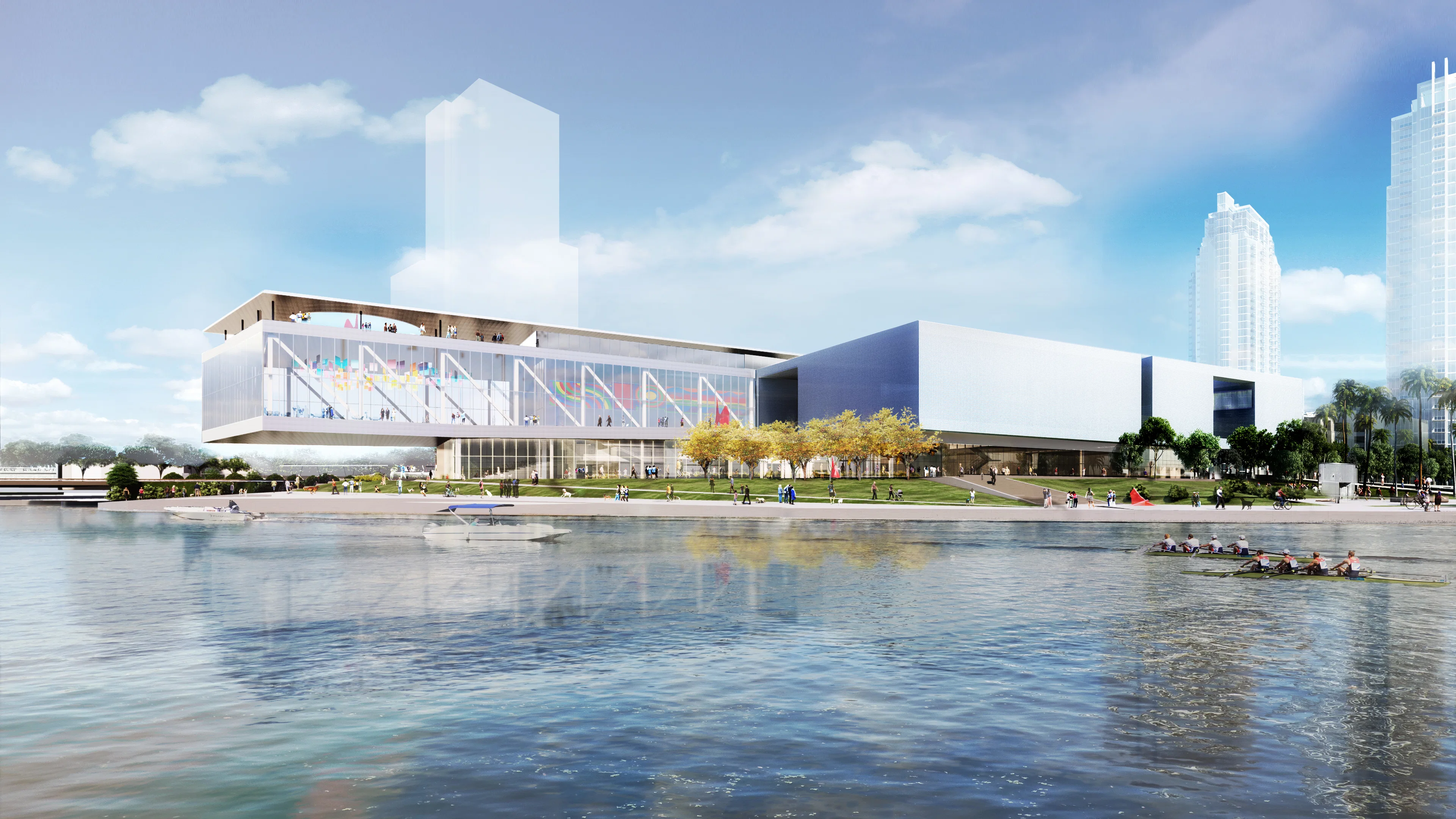
Core Coordination Factors for Tampa Museum of Art Events
- Downtown Riverwalk placement within the convention-services cluster led by the Tampa Convention Center
- Thematic alignment with Greek, Roman, and contemporary art collections for event relevance
- Reception, donor event, executive dinner, and cultural off-site formats
- Florida right-to-work labor baseline with venue-specific and organizer-determined rules
- Integration with Visit Tampa Bay meeting planner resources and facilities search
- Multi-venue sequencing between museum settings and 200,000-square-foot exhibit halls
- District differentiation from Westshore, fairgrounds, and northern resort clusters
Venue Context Within the Downtown Tampa Convention Core
The Tampa Museum of Art occupies a defined role in the Downtown / Water Street / Convention Core cluster. This area concentrates convention services around the Tampa Convention Center's 600,000 square feet of meeting and event space, including 200,000 square feet dedicated to exhibits that can accommodate up to 1,000 standard booths. The museum extends these capabilities by supplying cultural counterpoints that allow planners to construct full-spectrum programs moving from structured sessions to curated receptions along the Riverwalk.
Its address at 120 W Gasparilla Plaza places the property in direct proximity to riverfront pathways, Water Street developments, and Channel District hospitality options. These linkages reduce logistical friction when sequencing events across multiple downtown sites and support efficient attendee movement without reliance on extensive transportation networks. The cluster also ties into Ybor City for evening extensions, creating layered agendas that utilize the full range of downtown Tampa assets.
Planning within this core requires attention to how the museum's scale and focus differ from larger facilities. Where the convention center handles high-volume exhibit deployment, the museum prioritizes precision and thematic resonance. This district-level differentiation guides decisions on which program elements belong in expansive halls versus intimate cultural spaces.
- Led by Tampa Convention Center with documented 600,000 square feet of meeting space
- Riverwalk connectivity to Water Street, Channel District, and Harbour Island venues
- Complements rather than duplicates large-scale exhibit functions
Collections as Foundations for Event Thematic Development
Major holdings at the Tampa Museum of Art span Greek and Roman antiquities through modern and contemporary works, supplying substantive material for event design. Planners can reference these collections to shape receptions or donor events that extend conference themes into visual and historical dimensions. The antiquities offer classical anchors suitable for organizations with longstanding traditions, while contemporary pieces align with innovation-driven industries seeking forward-looking narratives.
This curatorial range supports activations that engage attendees on multiple levels. Rather than generic decor, elements can draw direct inspiration from exhibited works, creating coherence between the venue environment and event messaging. Such alignment elevates executive dinners from standard catering functions into experiences where art informs dialogue and reinforces key objectives.
Coordination at this level involves early review of collection contexts to ensure any temporary components maintain appropriate relationships with permanent installations. The resulting programs gain distinctiveness that sets them apart from events held solely at hotel ballrooms or the Florida State Fairgrounds' multipurpose halls.
Event Formats and Their Operational Implications
The Tampa Museum of Art aligns most closely with receptions, donor events, executive dinners, and culture-forward off-sites. These formats capitalize on the venue's inherent atmosphere and its nearness to the convention core. Receptions facilitate fluid networking within gallery-adjacent spaces, while donor events and executive dinners allow for controlled environments that highlight organizational priorities against a backdrop of significant artworks.
Culture-forward off-sites provide contrast to intensive convention schedules at the Tampa Convention Center or Saddlebrook Resort's 95,000 square feet of meeting space. Attendees gain perspective through exposure to the museum's collections, returning to main programs with renewed focus. This sequencing requires precise timing coordination to maintain overall agenda integrity across the downtown cluster.
Operational detail centers on understanding how each format interacts with the museum's daily public functions and the broader Visit Tampa Bay meeting ecosystem. The museum's listing within the destination marketing organization's resources helps planners map these activities against convention center availability and Water Street hotel room blocks.
- Receptions support fluid networking within cultural contexts
- Donor events and executive dinners emphasize exclusivity and thematic depth
- Off-sites deliver contrast to large-scale convention programming
Labor Coordination in Florida's Right-to-Work Framework
Florida maintains right-to-work status under its constitution, establishing an open-market labor environment rather than default union mandates at individual venues. This baseline applies across Tampa venues including the Tampa Museum of Art, the convention center, and resort properties. However, final conditions derive from event-specific exhibitor manuals, organizer directives, and any house service requirements rather than blanket market assumptions.
Programs that span the museum and the Tampa Convention Center with its documented utility infrastructure and on-floor services benefit from early alignment of labor scopes. Coordination prevents gaps when transitioning from cultural activations to larger exhibit setups. The fairgrounds' event rental workflow further illustrates the value of mapping all venue-managed processes before finalizing plans.
Planners reference Visit Tampa Bay's planner hub to identify support channels that clarify these parameters. The approach treats labor as one variable within comprehensive coordination rather than an isolated factor, ensuring compliance while maintaining flexibility inherent to the state's legal structure.
- Right-to-work protections affirmed in the Florida Constitution
- Event organizer and venue rules determine specific labor application
- Early confirmation supports smooth multi-venue execution
Integration with Visit Tampa Bay Planning Resources
Visit Tampa Bay operates a dedicated meetings hub containing convention center specifications, facilities search functionality, service directories, maps, and RFP assistance. These tools contextualize the Tampa Museum of Art within the wider destination offering, allowing planners to position cultural events alongside the 200,000-square-foot exhibit hall and surrounding hotel inventory. The hub's content on the convention center's waterfront location reinforces understanding of downtown connectivity.
Facilities search capabilities help identify how the museum complements other listed venues such as the Straz Center, Seminole Hard Rock Hotel & Casino Tampa, and the Vinoy Resort. This overview supports construction of balanced programs that distribute functions according to each site's documented strengths without assuming execution capabilities at any single location.
RFP support and mapping resources streamline the coordination process when museum activities form part of larger regional efforts spanning Hillsborough, Pinellas, Pasco, Polk, Manatee, and Sarasota counties. The resulting plans reflect accurate district differentiation between the convention core, Westshore airport corridor, east-side fairgrounds cluster, and northern USF-area options.
Multi-Venue Strategies Centered on the Museum
The Tampa Museum of Art performs best as a specialized component within larger Tampa Bay programs rather than a standalone large-format solution. Its Riverwalk location enables logical pairing with the Tampa Convention Center for daytime sessions followed by evening cultural extensions. This model distributes demands across the downtown cluster while leveraging the museum's collections for memorable closers or networking segments.
Regional expansion can incorporate the Florida State Fairgrounds' range of spaces from 5,000 to 87,000 square feet, Westshore conference hotels, or Saddlebrook's northern resort inventory. Such distribution optimizes logistics by matching activity type to venue capability, whether high-volume exhibits at the convention center or refined receptions at the museum.
Successful multi-venue coordination accounts for the distinct operational postures of each site. The museum emphasizes curatorial sensitivity, the convention center focuses on utility and scale, and outlying properties address overflow or specialized resort amenities. Visit Tampa Bay documentation assists in visualizing these relationships through maps and planner guides.
- Pair museum events with convention center exhibit programs
- Sequence cultural off-sites with fairgrounds or resort components
- Utilize county-level coverage across Hillsborough through Sarasota
Practical Coordination Timeline and Resource Alignment
Planning sequences for the Tampa Museum of Art typically open with confirmation of dates against the venue's public schedule and alignment with convention center availability. The museum's phone line at (813) 274-8130 serves as initial contact for basic availability while Visit Tampa Bay resources supply broader market context. This dual-channel approach grounds decisions in verified destination data.
Subsequent steps involve mapping attendee flow along the Riverwalk, confirming any catering or technical parameters through official channels, and ensuring thematic elements reference the Greek, Roman, and contemporary collections appropriately. Labor considerations receive attention concurrent with these reviews given the right-to-work baseline and event-specific variables.
Final validation cross-references all elements against the full Tampa Bay cluster to maintain operational consistency. This process treats the museum as one node in an interconnected system led by the convention center and reinforced by surrounding county venues, producing programs that respect each location's documented characteristics.
Frequently Asked Questions on Tampa Museum of Art Event Coordination
Q: What primary event formats does the Tampa Museum of Art support?
The venue is recognized for receptions, donor events, executive dinners, and culture-forward off-sites that leverage its downtown Riverwalk location and collections of Greek and Roman antiquities alongside modern and contemporary works.
Q: How does the museum fit within Tampa's downtown convention cluster?
It forms part of the Downtown / Water Street / Convention Core that includes the 600,000-square-foot Tampa Convention Center, Water Street hotels, and riverfront venues, enabling sequenced programs that combine large exhibits with intimate cultural experiences.
Q: Does Florida's right-to-work status affect museum events?
The state's constitutional right-to-work framework creates an open-market labor baseline, but actual requirements follow event organizer directives, venue policies, and any official service contractor stipulations.
Q: How can the museum complement Tampa Convention Center programs?
Its proximity to the 200,000-square-foot exhibit hall and position along the Riverwalk allows cultural activations to extend convention agendas, adding thematic depth drawn from the museum collections without duplicating large-scale exhibit functions.
Q: What resources support planning that includes the Tampa Museum of Art?
Visit Tampa Bay's meeting planners hub supplies facilities search, maps, convention center details, and RFP assistance that integrate the museum into comprehensive downtown and regional Tampa Bay strategies.
Q: Why differentiate the museum from fairgrounds or resort venues?
Its special-event focus on curated cultural environments contrasts with the Florida State Fairgrounds' range of expo and outdoor spaces or Saddlebrook's 95,000 square feet of flexible resort meeting areas, supporting precise program segmentation across Tampa Bay clusters.