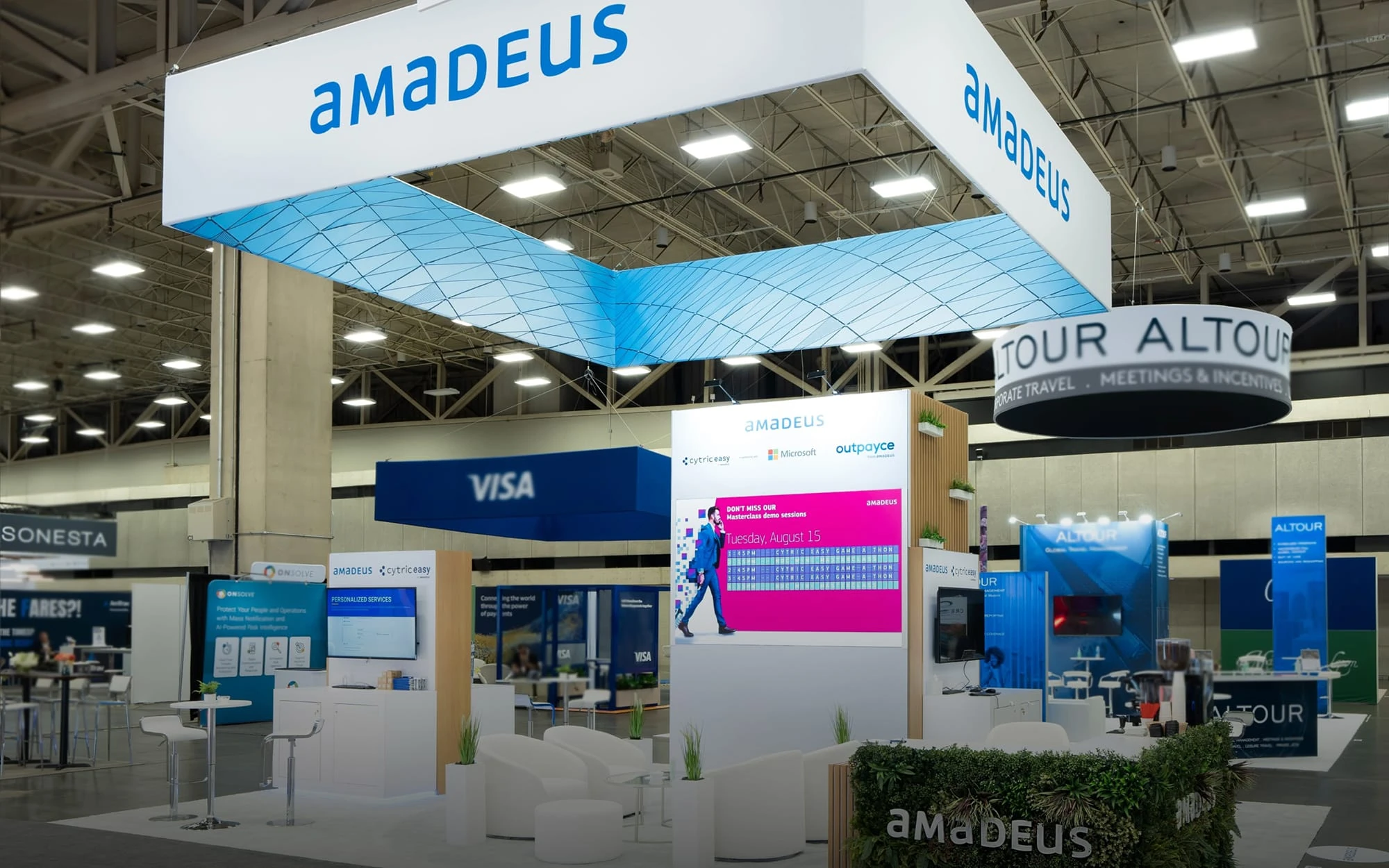
Core Advantages of Rental Exhibit Booths in Tampa Markets
- Cost efficiency through short-term leasing that avoids storage, maintenance, and depreciation expenses typical of purchased displays.
- Scalability to fit inline, peninsula, or island configurations within the Tampa Convention Center's 200,000-square-foot hall or fairgrounds venues.
- Rapid deployment with pre-fabricated elements designed for quick assembly, aligning with tight show schedules.
- Access to venue-matched utilities like electric, water, and compressed air without custom engineering.
- Sustainability via reusable components that reduce waste compared to single-use builds.
- Customization potential through interchangeable graphics and modular add-ons for brand-specific messaging.
- Risk mitigation by transferring ownership liabilities to rental providers during event durations.
Configuring Rental Booths for Tampa Venue Layouts
Rental exhibit booths configured for Tampa venues start with standard 10-by-10-foot inline footprints that slot efficiently into the Tampa Convention Center's expansive 200,000-square-foot exhibit hall, where up to 1,000 such units can deploy simultaneously. Planners select aluminum extrusion frames or tension fabric systems that withstand the hall's 30-foot ceiling heights and open waterfront sightlines, ensuring visibility from multiple angles. These structures incorporate locking mechanisms for stability on the convention center's level flooring, which supports heavy loads during peak attendance periods.
Expanding to 20-by-20-foot islands or peninsulas requires verifying booth space allocations via the event's floor plan, as shared utilities demand precise placement relative to hall columns and access aisles. At the Florida State Fairgrounds' Expo Hall or TECO Arena, rentals adapt to spaces up to 87,000 square feet by incorporating wheeled bases for repositioning across equestrian or entertainment configurations. Early review of venue diagrams prevents conflicts with neighboring exhibitors, particularly in high-density setups.
Dismantling protocols emphasize sequenced removal to clear pathways for freight handlers, coordinating with the venue's show offices for timed egress. This process safeguards rented components against damage, preserving deposit refunds while adhering to post-event hall resets.
- Verify booth perimeter rules in exhibitor manuals before rental selection.
- Incorporate height-adjustable elements for variable ceiling clearances.
- Plan for 24-48 hour advance shipping to venue docks.
Integrating Utilities in Rental Booth Designs
Tampa Convention Center's exhibit hall provisions for electric, water, and compressed-air hook-ups necessitate rental booths with integrated service channels, such as rear-access panels that conceal cabling and hoses from attendee views. Exhibitors order these through the venue's service contractor, specifying amperage for LED lighting or interactive demos that draw consistent power across three-phase outlets. Rental providers pre-wire frames to match these standards, eliminating on-site modifications that could delay opening.
In fairgrounds environments like the Entertainment Hall, where spaces flex from 5,000 square feet for targeted expos to larger outdoor transitions, rentals feature portable power distribution units compliant with temporary setups. Water lines support beverage sampling or product demos, routed via drip-free connectors to avoid floor hazards in high-traffic zones. Compressed air enables pneumatic displays, with regulators calibrated for venue pressures to maintain consistent operation throughout event durations.
Coordination with show organizers confirms utility lead times, often requiring orders 30 days pre-event to secure floor access. This foresight prevents disruptions, as Tampa's venues prioritize house services for equitable distribution amid capacities serving thousands.
Logistics for Booth Installation and Move-Out
Installation of rental exhibit booths in Tampa follows venue-dictated move-in windows, typically starting 72 hours prior at the convention center to accommodate the 600,000-square-foot facility's multi-hall operations. Teams assemble modular segments using hand tools, aligning tension fabrics over frames illuminated by integrated halogens that highlight graphics visible from 50 feet away. Forklift paths remain clear during this phase, with rentals designed for palletized delivery to minimize touch time.
At the Florida State Fairgrounds, logistics adapt to campus-wide venues by staging components in designated marshal areas before transfer to TECO Arena or equestrian rings. Rentals dismantle in reverse order, segmenting into cases under two hours to expedite freight-out, aligning with promoter portals that track exhibitor timelines. This efficiency supports back-to-back bookings in the 87,000-square-foot largest spaces.
Post-event inspections verify component integrity, documenting any venue-induced wear for provider claims. Florida's right-to-work status facilitates flexible staffing, but final conditions hinge on exhibitor manuals and official contractors.
- Schedule labor through approved channels to comply with show rules.
- Use protective padding on all edges during transport.
- Confirm dock hours with venue operations teams.
Customization Strategies for Rental Displays
Customization in Tampa rental exhibit booths centers on SEG fabric graphics that swap smoothly for event-specific branding, printed on wrinkle-resistant materials suited to the humid climate. Counter wraps and header panels incorporate backlit channels, drawing eyes across the convention center's open hall. Modular shelving adds product tiers, adjustable for weights up to 500 pounds per level without frame stress.
For fairgrounds consumer shows, rentals feature weather-resistant exteriors for semi-outdoor transitions, with vinyl laminates that endure direct sunlight. Interactive towers house tablets for lead capture, powered via hall hook-ups to sustain digital engagement. These elements conform to booth perimeters, avoiding encroachment in dense layouts.
Lead times for custom prints run 4-6 weeks, synced with RFP responses from Visit Tampa Bay's meetings hub. This ensures readiness for downtown or Westshore programs, where visual distinction drives traffic.
Budgeting Rental Booths for Tampa Events
Budgeting rental exhibit booths factors base frame leases at $2,000-$5,000 for 10-by-10s, scaling to $10,000+ for 20-by-20 islands suitable for the convention center's capacities. Add-ons like lighting packages or furniture rentals contribute 20-30% more, offset by no shipping surcharges on reusable carriers. Utility orders via venue contractors append $500-$2,000 based on draw, confirmed early to cap exposures.
Fairgrounds events budget lower for basic configs in 5,000-square-foot halls, emphasizing portable graphics over heavy builds. Total costs stay 40-60% below purchases, reclaimable via lead generation in high-attendance expos. Multi-event discounts apply for repeat Tampa circuits.
ROI tracking via embedded metrics panels quantifies booth performance, informing future rentals. Venue RFP support from Visit Tampa Bay aids cost benchmarking across clusters.
- Allocate 15% contingency for unforeseen utility upgrades.
- Compare quotes against exhibitor manual minimums.
- Track depreciation avoidance in financial models.
Navigating Labor and Compliance in Florida
Florida's right-to-work framework supports exhibitor choices in booth labor, contingent on venue and show guidelines at the Tampa Convention Center, where house services handle utilities but allow external setup under supervision. Rental installations proceed via coordinated crews, adhering to four cafe-equipped hall zones for worker breaks during extended shifts.
Fairgrounds workflows route through event rentals portals, integrating catering and venue FAQs into labor plans for smooth execution across halls. No blanket union mandates appear in public sections for resorts like Saddlebrook's 95,000 square feet, emphasizing organizer alignment.
Exhibitor manuals dictate final rules, with early submissions securing approvals. This positions rentals as low-friction options amid Tampa's diverse venue clusters.
Sustaining Impact Beyond Setup
Post-setup, rental exhibit booths sustain attendee flow through ergonomic reception counters and tiered display zones that guide traffic in the convention center's 200,000-square-foot expanse. Maintenance kits address fabric tautness or LED failures, deployable during show hours without halting operations.
Data capture stations embedded in structures feed real-time analytics, optimizing pitches for Tampa's professional audiences. Dismantle efficiency recycles components for future events, upholding sustainability in right-to-work labor contexts.
Long-term, rental histories inform scalable upgrades, leveraging venue insights from Visit Tampa Bay for refined deployments.
- Monitor foot traffic with integrated counters.
- Refresh graphics mid-show if permitted.
- Document successes for portfolio building.
Rental Exhibit Booths FAQs for Tampa Exhibitors
Q: How do rental exhibit booths accommodate Tampa Convention Center utilities?
Rentals integrate channels for electric, water, and compressed-air hook-ups provided in the 200,000-square-foot hall, ordered via venue contractors for smooth power distribution.
Q: What sizes are available for Florida State Fairgrounds events?
Configurations scale from 10-by-10 inline to larger islands fitting spaces up to 87,000 square feet in Expo Hall or TECO Arena, verified against event floor plans.
Q: Does Florida's labor environment affect booth setup?
As a right-to-work state, it allows flexible coordination, but venues like the convention center require alignment with exhibitor manuals and official services.
Q: What is the typical lead time for custom rental graphics?
4-6 weeks for printing and assembly, coordinated with show timelines to meet move-in windows at Tampa venues.
Q: How do rentals handle high-ceiling venues?
Frames adjust up to 30 feet at the convention center, with tension systems ensuring stability and visibility.
Q: Are there budget advantages for multi-venue Tampa shows?
Yes, reusable components reduce costs by 40-60% versus purchases, with discounts for circuits across downtown and fairgrounds.